

Degumming And Bleaching
Degumming And Bleaching
Introduction to Degumming
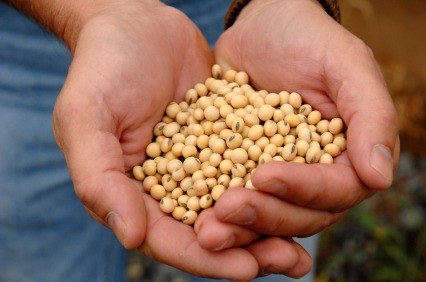
The soybean, in addition to being our most important source of edible oil and protein, is also the only current commercial source of lecithin. Worldwide consumption of this by-product of soybean processing is estimated at 200,000 tons/year, and it finds uses in variety of food and industrial products. Industrially, lecithin is removed by treating the crude oil with water, inorganic and organic acids, enzyme and neutralization with caustic; the gums precipitate from the oil and are recovered by centrifugation or sedimentation. Some processors refine the crude oil directly, and the gums are removed with the soapstock. Thus, to the processor, the soybean phoshatides may be considered valuable by-products that must be removed in order to render the final product suitable for end uses as salad-cooking oils, margarine’s, or shortening stocks.
DEGUMMING
Phospholipids (Pls) are natural components of oil and oilseeds. They are not desirable because they settle out of the oil during shipping and storage. Pls have adverse effects on the color and flavor of oil. The presence of Pls creates problems during oil processing and some food applications, i.e. frying. Pls are removed from oil during the degumming process. There are two types of Pls: hydratable and nonhydatable. In general, crude vegetable oils contain about 10% of nonhydratable Pls. However, the amount may vary significantly depending on the quality of the seed, type of seed and conditions during the oil milling operation. Hydratable Pls can be removed in most part by water-degumming process. Nonhydatable Pls can be removed only during acid degumming or enzymatic degumming processes.
WATER DEGUMMING
Hydratable Pls can be removed from the oil by water-degumming. As rule of thumb about 2% hot water at 160-176 F added to oil and mixed 10-15 minutes. During this process, Pls absorb water and lose their lipophilic characteristics, become oil insoluble and agglomerate into a gum phase. Gums are separated by centrifugation and added back to meal. Gums can be further processed to produce lecithin, which is used as emulsifier in food and feed applications. The residual phosphorous level after water degummed oil is about 100 parts per million.
ACID DEGUMMING
This degumming method is suitable for pretreating palm oil, palm kernel oil, coconut and olive oil as well as animal fats with the aim of reducing bleaching earth consumption in the physical refining process. This considerably improves the economy of this method.
The crude oil is initially heated to the optimum process temperature in a heat exchanger. A metering
unit is used for adding a small quantity of phosphoric or citric acid, which is mixed intensively with the oil
in a centrifugal mixer. After a brief reaction time, hot water is added and mixed.
The heavy phase which contains phosphatides, proteins, pigments and other impurities is then separated. The oil which is treated in this way is generally sent directly to the bleaching stage and deacidified by means of distillation.
Many features for your benefit:
- Reduction of bleaching earth consumption
- Better end product quality
- Less fouling of downstream equipment
CHEMICAL REFINING
Commercial crude oils usually contain about 1-3 percent FFAs. High quality oils contain 0.5 percent or less FFA. Although most of the long-chain FFAs do not significantly impair the taste of the oil, the short-chain FFAs may have a soapy and rancid flavor. Soapstock is separated from refined oil by gravity settling, filtration or centrifugation. Furthermore, FFAs accelerate oxidation reactions, consequently, reducing the oxidative stability of the oils. Crude oils are traditionally deacidified or refined by chemical methods. During chemical refining, a heavy soapstock (sodium or potassium salts of fatty acids) is formed.
PHYSICAL REFINING
Physical refining, also known as deacidification by steam distillation, is a process where FFAs and other volatile compounds are distilled off the oil. Physical refining, a viable alternative for caustic/chemical refining process, is based on the higher volatility of FFAs than TAGs at high temperatures and low pressures. The final FFA content in the refined oil can be reduced to 0.005 percent when physical refining is used.
Phospholipid (Pls) content of different oils and fats
| Type of Oil | P-Content (ppm) | Phospholipids (Pls) % |
| Coconut | 10 – 20 | 0.025 – 0.05 |
| Palm | 15 – 40 | 0.04 – 0.01 |
| Sunflower | 200 – 500 | 0.05 – 1.3 |
| Maiz germ (corn) | 300 – 800 | 0.7 – 2.0 |
| Rapeseed | 200 – 800 | 0.5 – 2.0 |
| Cottonseed | 400 – 1000 | 1.0 – 2.5 |
| Soyabean | 600 – 1200 | 1.5 – 3.0 |
Bleaching
The primary purpose of the bleaching process is to ensure that all color bodies have been successfully removed through adsorption to obtain a desired color in your finished product. Although, for conventional refining, bleaching also serves to eliminate trace impurities which can negatively affect downstream stability and processing.
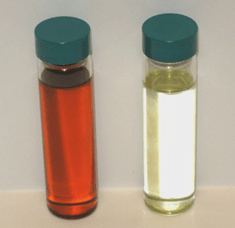
Features of the process are as follows:
- Accurate and convenient metering of oil/earth
- Continuous and perfect dispersion of bleaching earth in the oil, ensuring simultaneous and intimate contact of all earth particles with the processed oil under optimum conditions of vacuum (55 torr) and temperature (90-100 °C)
- Uniform holding time of the oil-earth mixture in the bleacher (30 minutes)
- Oil filtration in hermetic leaf filters with stainless steel frames and cloths, requiring no maintenance.
The degummed oil is transferred to an oil earth mixer where bleaching earth dosing is done and intimate mixing takes place. The oil from the oil/earth mixer is then transferred to the oil heater where the oil is heated to the desired temperature under vacuum pressure. The mixture is then transferred to the continuous bleacher. Here the oil is under severe agitation and a constant level is maintained. There is no short-circuiting of the material and uniform bleaching takes place. This procedure ensures optimum DE aeration of both oil and earth, as well as intimate mixing of both adsorbent and the oil. The oil earth mixture is then pumped to filters. The two filters operate alternately. The filtered oil is kept under vacuum in filtered oil receiver item to avoid any oxidation at this stage of the refining line and then pumped through security filter item to ensure that traces of impurities are eliminated. After the filtration operation, the spent cake is discharged and disposed of. The filter cake discharge is done by pneumatic vibrators.
The advantages of this system are:
- Savings of both labor and floor space as well as reduced bleaching earth consumption
- Accurate and convenient metering of oil and earth for obtaining oil of the desired color.
- Continuous and perfect dispersion of bleaching earth in the oil, ensuring simultaneous and intimate contact of all earth particles with the processed oil under optimum conditions of vacuum (55 torr), temperature (90-100 °C
- Uniform holding time of the oil-earth mixture in the bleacher (30 minutes
- Oil filtration in hermetic leaf filters with stainless steel frames and cloths, requiring practically no maintenance
- Filtered oil is kept under vacuum during whole process
- The bleacher is totally maintenance free as there are no mechanical agitators.
- Oil content in spent cakes not exceeding 24%. Oil can be recovered using various methods.
- The live steam injected in the oil increases the bleaching efficiency of the activated earth.
For more information on the degumming process, call one of our biodiesel specialists today at (800)497-5841 or email us at sales@srsintl.com


